Title: Cornelius Ryan
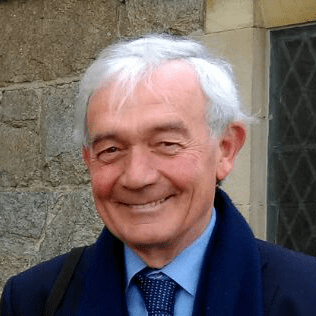
Speaker: Philip Lecane, Historian.
Time: @ 7:45 PM
Location: Iona Pastoral Centre
Presenter: Philip Lecane, Historian.
This evening Philip takes us on a whirlwind tour of the life and times of Cornelius Ryan, but as Aoife O’Tierney recounts many members may recall Philip giving a ‘great talk’ on the sinking of the RMS Leinster in a previous talk.

Philip moved to to Dun Laoghaire, County Dublin (known as Kingstown at the time of the RMS Leinster sinking) in 1984. He first became aware of the sinking when a number of references were made to it at local history society meetings. Surprised that so little was known about the event, he was drawn to research the story. In 2005, his book Torpedoed! The RMS Leinster Disaster was published. In 2003 and 2008 he chaired committees which planned very successful RMS Leinster commemorative events. He worked with Canadian Will Lockhart to create the website http://www.rmsleinster.com. In 2015, his book Beneath a Turkish Sky: The Royal Dublin Fusiliers and the Assault on Gallipoli was published. In 2018, on the centenary of the sinking, his book Women and Children of the RMS Leinster: Restored to History was published. A committee member of the Royal Dublin Fusiliers Association and Foxrock (County Dublin) Local History Club. He has also worked on a biography of Irish First World fighter ace George McElroy.
Source: rmsleinster.com
Cornelius Ryan (5 June 1920 – 23 November 1974) was an Irish journalist and author known mainly for writing popular military history.
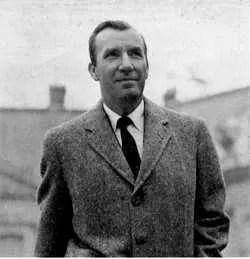
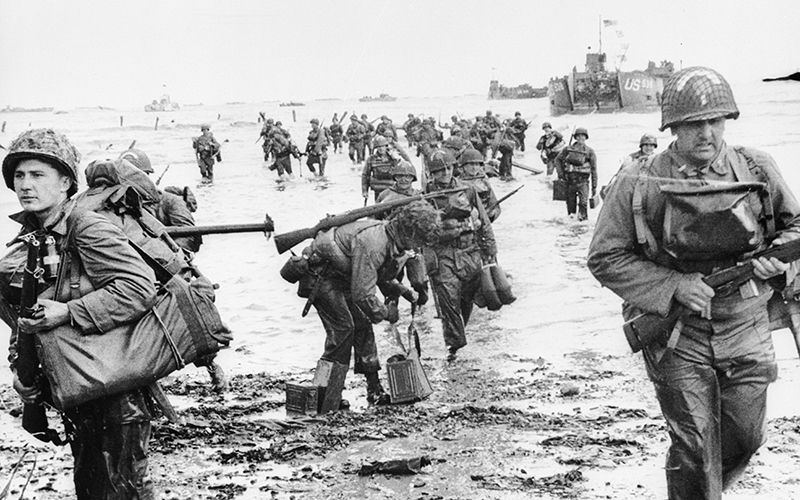
Ryan was the son of a British soldier and an Irish-nationalist mother. His grandfather had been an irascible journalist in Ireland and young Connie soon determined journalism for his own career. Still in his early 20s, he was sent by a London newspaper to cover American G.I.s in Britain. At first he found it difficult, but later admitted that, “Among those brash, irreverent, confident [American] soldiers, I found my spiritual home.” He viewed D-Day from a ship in the invasion fleet.
He became one of the preeminent war correspondents of his time, flying fourteen bombing missions with the Eighth and Ninth US Air Forces and covering the D-Day landings and the advance of General Patton’s Third Army across France and Germany. After the end of hostilities in Europe, he covered the Pacific War.
Below a British Paté news reel of the ‘Longest Day’ – the D-Day landings on June 6th 1944.
Source: British Paté via YouTube.com
After the war, he covered the establishment of Israel. He immigrated to the United States in 1947 to work for Time. He left Time in 1949, served briefly with Newsweek, and joined the Collier’s staff as an associate editor in 1950. During that same year he also married Kathryn Morgan and became a naturalized citizen of the United states. During Ryan’s association with Collier’s, he achieved international recognition for his journalistic reporting of the United States space program and introduced Wernher von Braun to the American public. In 1956, two of his articles, “One Minute to Ditch” and “Five Desperate Hours in Cabin 56″ gained him three national awards for distinguished magazine writing: the Benjamin Franklin award, the Overseas Press Club award, and the University of Illinois award.
He was awarded the Christopher Award for the best book on foreign affairs in 1959 and the Bancarella Prize (Italy) in 1962. Pursuing journalism in the United States after the war, he finally persuaded Reader’s Digest to underwrite his effort to write a book for the 15th anniversary of the Normandy invasion. He flung himself into the work, interviewing not only Americans, Canadians and British, but also French and Germans. He joined the staff of Reader’s Digest immediately following the publication of The Longest Day, continuing his career in journalism while beginning research on his second World War II battle book, The Last Battle, which was published in 1965.
In addition to his classic works He was especially known for his histories of World War II events: The Longest Day: 6 June 1944 D-Day (1959), The Last Battle (1966), and A Bridge Too Far (1974), he is the author of numerous other books, which have appeared throughout the world in nineteen languages. Awarded the Legion of Honor by the French government in 1973, Mr. Ryan was hailed at that time by Malcolm Muggeridge as “perhaps the most brilliant reporter now alive.”
Cornelius Ryan Photo Gallery: click image to enlarge.
Click on the (i) Information icon, bottom right of gallery for further information on some images.


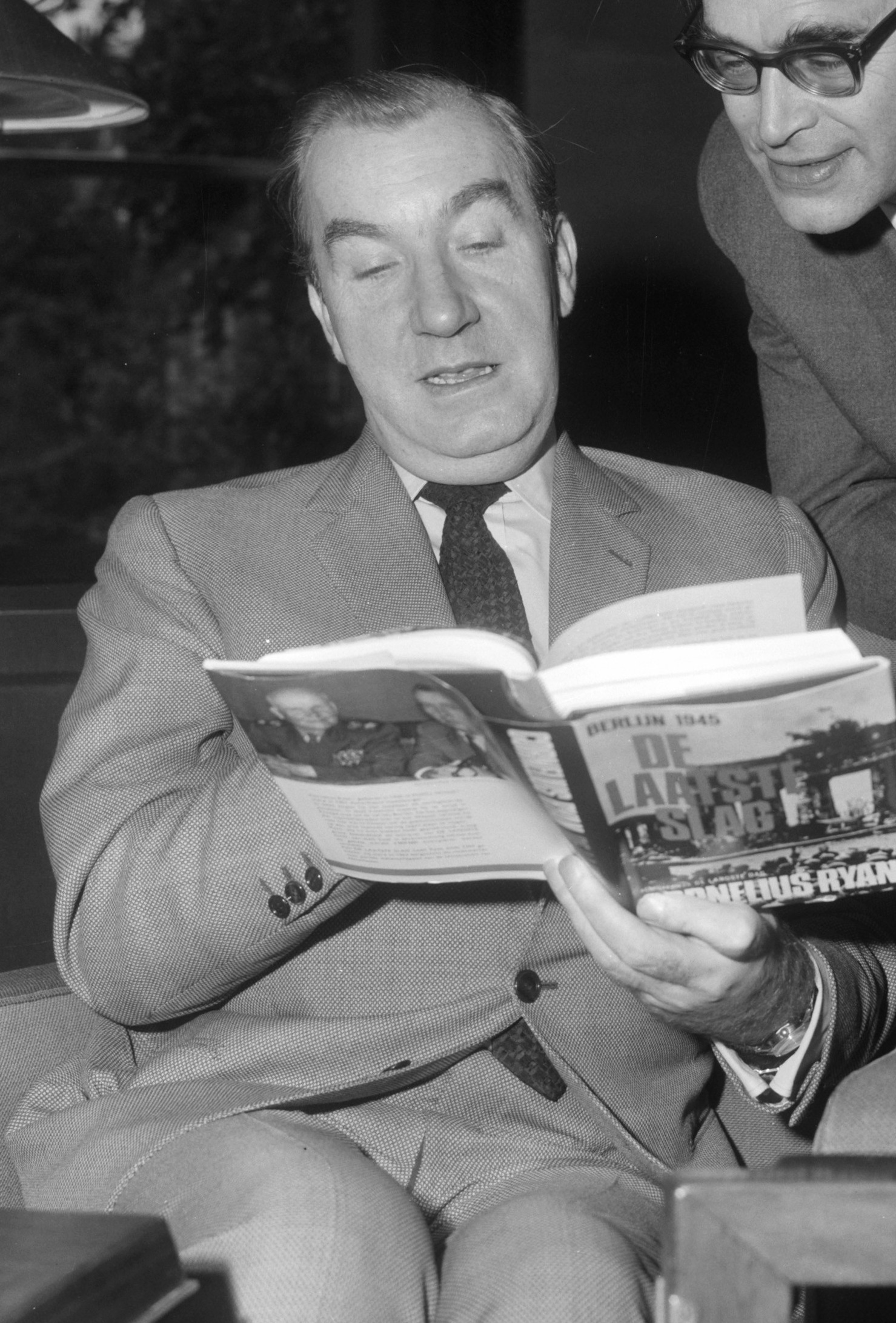
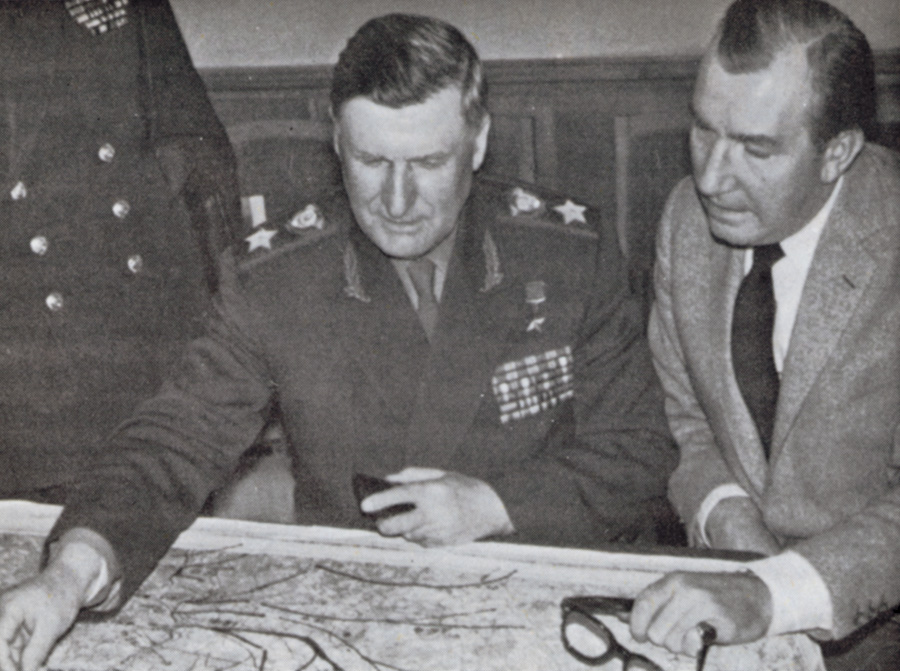

Source: Cornelius Ryan Last Battle Promotional Film via mrb6812 on YouTube
He was diagnosed with prostate cancer in 1970 at age 54, and he began a program of chemotherapy. Meanwhile, he continued his research and writing on the third of his battle books, A Bridge Too Far. In July of 1973 he was awarded the French Legion of Honor in recognition of his contributions to the fields of journalism and historical writing. The following year A Bridge Too Far was published and he was awarded an honorary Doctor of Literature degree from Ohio University. During the publicity tour for his last book he re-entered the hospital and died of cancer on November 23, 1974.
The notes and tapes he made during his bout with cancer were compiled and edited along with his wife’s diaries and published in 1976 as A Private Battle.
Sources: wikipedia.org; Simon & Schuster; Ohio University; warfarehistorynetwork.com
Source: Library of America via YouTube.com
Cornelius Ryan’s book ‘A Bridge Too Far’ was turned into a full length feature film in 1977.
Duration 2.56 hours.
Source: Hertogdom Gelderland via YouTube.com


 Knocklyon History Society